

The SEO power of properly formatted Title Tags
Does your website have optimal title tags?
What are title tags? How do they work? Do they have any impact on SEO?

What are title tags?
Webpage title tags define the content of a particular online page. They sit at the top of a webpage document, inbetween the <title> tags and are displayed in the top window of any website browser.
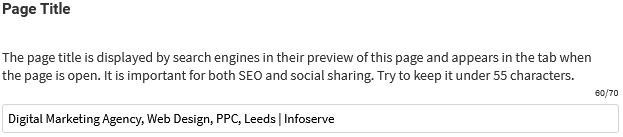
This is Infoserve's title tag...

This how Infoserve's title tag looks in a browser...

Google uses the page titles in its SERPs (search engine results page)...

Google sometimes reworks a websites page titles for display purposes.
Why are title tags important?
Writing page titles is very important and should always be done, on any website. Here are the reasons why...
1/ The title tag tells Google what the page is about and defines the content of the page. Correct use of page titles, alongside relevant content, headings and images helps Google see what your page is aimed at.
2/ On social platforms, when people share a link to your website, the page title is used as a preview of that website, so it needs to be accurate.
How do you write title tags?
In the early days of website design, you had to write the HTML title tags directly into the document, however these days you will probably have a website built on a content management system, such as Wordress or an online website builder, such as Infoserve's web builder. Most modern day content management systems will easily allow you to add and edit title tags.
Do title tags really have an effect on SEO?
Definitely! With our SEO package, title tags are one of the first things Infoserve look at on a website.
One of our clients came to us and asked us to help them with their rankings and we discovered the company's title tags were not optimised for their keywords. After we rewrote their main pages title tags, the website started to rank better for their keywords...

Tips for writing effective title tags
Here are some handy tips for writing effective title tags which will help your SEO and social sharing.
- Imagine you are Google, or a website visitor on your webpage - what is this page about? How do you communicate to them what the page is about? The first thing to do is write obvious and simple title tags. For example, if you are an accountants based in Leeds, your title tag should be something like "Accountant | Leeds | ABC Accounting"
- Keep your title tags short, making them long will not help. Google search results only display between 55-60 characters of the page title tag.
- Do not stuff your title tag with keywords and locations. As described in the point above, keep the length short and do not overly spam the title tag.
- If you are unsure what your title tag needs to be, check your Google My Business account, if this is setup correctly, you can use the main category and location from GMB for your title tag. This will count as a good SEO move.
- Treat each page as its own website, make sure each page title directtly relates to what is on that individual page.
- Follow this format "Service | Location | Company Name"
Are your website title tags optimised?
If you have followed our advice above, you should be on the right track. However, why not run your website through our free digital marketing audit tool?
Our marketing tool acts as a website audit and SEO audit platform and can show you how your title tags are scoring.

If our audit is picking up issues with your title tags, contact our friendly team and we can advise you how we can help you improve your title tags. Or check out our websites and SEO product pages.